
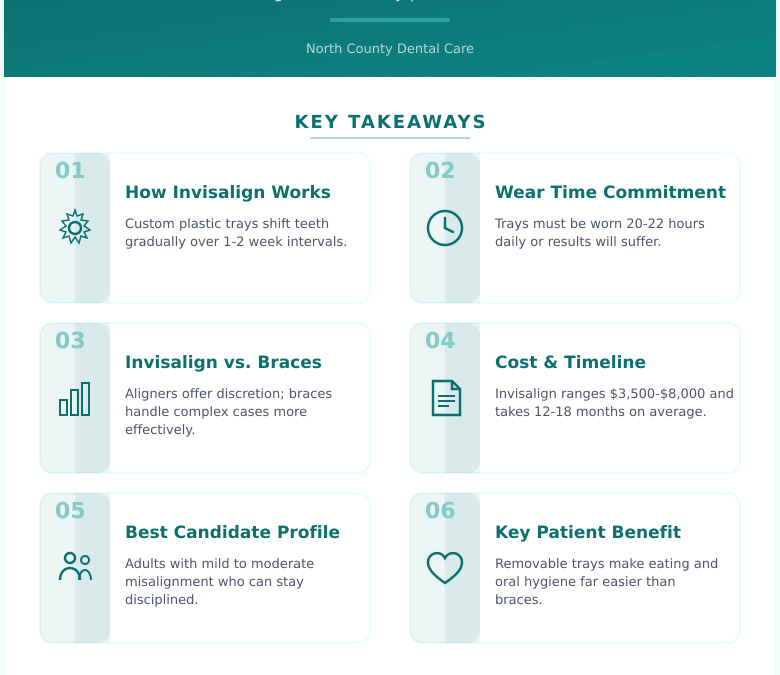
Invisalign is a clear aligner system that gradually shifts teeth into alignment using a series of custom-fitted, removable plastic trays instead of metal brackets and wires. It offers a discreet, more comfortable alternative to traditional braces for many patients dealing with mild to moderate alignment issues.
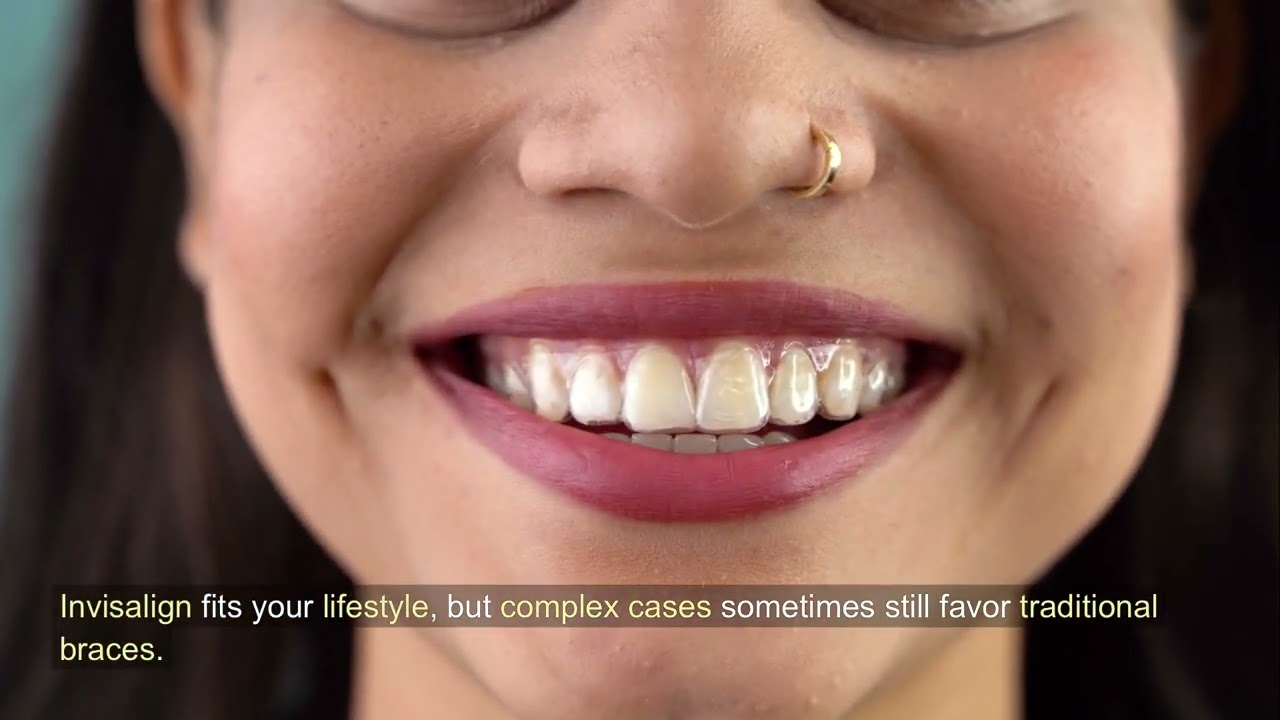
This guide focuses specifically on helping adults and teens in Vista, CA understand whether Invisalign is a practical fit for their smile goals, lifestyle, and budget in 2026.
Invisalign Definition: A removable orthodontic treatment using a series of transparent, custom-molded aligner trays that apply gentle, consistent pressure to shift teeth into a prescribed position over time.
The most common question we hear at North County Dental Care is simple: “Will I actually wear them?” That question matters more than most people realize, because Invisalign only works when you do your part. Let’s break down what that actually looks like day-to-day.
How Invisalign Actually Works
Each set of aligner trays is worn for about one to two weeks before you move to the next set in the sequence. The trays are made from smooth, BPA-free plastic and are nearly invisible when worn. Most patients change trays at home on a schedule set by their provider.
The process begins with digital impressions or 3D scans of your teeth. No messy putty molds. Your provider maps out the full tooth movement plan digitally, and you can often preview a simulation of your results before treatment even starts. That transparency is one reason so many patients in the San Diego area choose clear aligner therapy over traditional orthodontics.
According to data from Align Technology, more than 15 million patients worldwide have been treated with Invisalign as of 2026. Clear aligners have seen growing adoption in recent years, reflecting a broad shift in orthodontic preferences among patients seeking more discreet treatment options.
Invisalign vs Traditional Braces: Which Approach Works?
Where Invisalign succeeds: Invisalign trays are removable, making eating and oral hygiene far simpler. They’re nearly invisible, which matters to adults and older teens who feel self-conscious about metal brackets. They also tend to cause less gum and cheek irritation than wires.
Where Invisalign falls short: Invisalign requires exceptional patient discipline. You must wear trays 20 to 22 hours per day. Complex bite issues or severe crowding may be beyond what aligners can correct efficiently. And if you lose a tray, there’s a replacement cost.
Where traditional braces succeed: Braces work around the clock without any patient compliance required beyond hygiene. They handle more complex cases, including significant overcrowding, severe bite misalignment, and rotations that aligners struggle with. They’re often more cost-effective for long treatment timelines.
Where traditional braces fall short: Metal hardware affects speech initially, makes flossing difficult, and restricts certain foods. Many adults find them socially uncomfortable in professional environments.
The verdict: For adults and teens with mild to moderate misalignment who can commit to wearing trays consistently, Invisalign delivers comparable results to braces with far greater comfort and discretion. For complex cases or younger patients who may not self-manage compliance, traditional braces remain the stronger clinical choice.
| Option | Typical Cost Range (2026) | Timeline | Best For |
|---|---|---|---|
| Invisalign Full | $3,500 – $8,000 | 12-18 months | Moderate alignment issues, adults, compliance-ready patients |
| Invisalign Lite | $2,500 – $4,500 | 6-9 months | Minor corrections, crowding, spacing |
| Traditional Metal Braces | $2,500 – $6,000 | 18-36 months | Complex cases, younger patients, budget-conscious |
| Ceramic Braces | $3,000 – $7,000 | 18-36 months | Aesthetic preference with complex needs |
Cost ranges reflect general industry data for California (2026). Individual pricing varies based on case complexity and provider. These are not the fees charged by any specific practice.
Thinking about this for your situation? Contact us and we’ll walk you through your options with no pressure and no commitment required.
What Invisalign Covers (and What It Doesn’t)
Crowding: One of the most common reasons patients pursue clear aligner therapy. Invisalign handles mild to moderate crowding well.
Spacing gaps: Gaps between teeth close predictably with aligners in most cases.
Overbite and underbite: Mild versions respond to Invisalign treatment. Severe skeletal discrepancies typically require additional intervention.
Adult orthodontic treatment has grown steadily in recent years as clear aligner options have expanded and become more accessible. According to the American Dental Association’s guidance on orthodontic treatment, properly aligned teeth are easier to clean and contribute to better long-term oral health. That’s a real shift from even a decade ago when braces carried a much stronger association with adolescence.
Your Invisalign Action Plan
- Step 1 – Initial Consultation: Your provider evaluates your bite, crowding, and overall oral health to confirm you’re a candidate. Expect digital scans and photos. X-rays may be taken to assess root and bone position.
- Step 2 – Treatment Planning: Using 3D imaging software, your provider designs a tray-by-tray movement sequence. You may view a simulation of projected results before committing.
- Step 3 – Tray Fabrication: Custom trays are manufactured and shipped to your provider. This typically takes two to three weeks after your plan is finalized.
- Step 4 – Active Treatment: You wear each set of trays for one to two weeks. Check-in appointments occur every six to eight weeks. Compliance tracking attachments (small tooth-colored bumps) may be placed on some teeth to help with movement.
- Step 5 – Retention: Once active treatment ends, you’ll wear a retainer to maintain your results. This step is non-negotiable. Without retention, teeth drift back.
Common Mistakes That Slow Down Results
The most common mistake we see is patients not wearing trays long enough each day. Even two or three hours of daily skipping adds up fast and can push your timeline back significantly.
- Forgetting to reinsert trays after meals is the top compliance issue
- Drinking hot beverages with trays in warps the plastic and distorts fit
- Skipping retainer use after treatment allows relapse within months
- Starting treatment with untreated gum disease undermines tooth movement and safety
Firms that implement consistent daily tray routines – using phone alarms, a tray case at every meal location, and a habit tracker – typically see their results finish on or ahead of schedule.
Pre-Appointment and Post-Treatment Checklists
Before your first Invisalign appointment:
- ☐ Schedule any needed cleanings or cavity treatments first
- ☐ Bring a list of current medications (some affect tooth movement)
- ☐ Prepare questions about your specific bite concerns
- ☐ Check if your dental insurance includes an orthodontic benefit
After receiving your trays:
- ☐ Set daily reminders for tray wear tracking
- ☐ Keep a travel toothbrush and case with you at all times
- ☐ Store trays in their case when eating – never wrap in a napkin
- ☐ Contact your provider immediately if a tray cracks or is lost
Insurance and Cost Considerations in California
Many PPO dental insurance plans include an orthodontic lifetime maximum – often between $1,000 and $2,000 – that can apply to Invisalign just as it would to braces. California residents should verify whether their plan distinguishes between “clear aligner therapy” and “orthodontic treatment,” since some older policies have exclusions.
Flexible Spending Accounts (FSAs) and Health Savings Accounts (HSAs) can cover Invisalign costs with pre-tax dollars, which is a meaningful savings for most patients. California does not offer a specific state tax credit for orthodontic care, but federal medical deduction rules apply when costs exceed 7.5% of adjusted gross income.
Patients in Vista and surrounding communities including Oceanside, San Marcos, Escondido, Carlsbad, and the broader San Diego County area should confirm in-network status with their provider before beginning treatment to maximize any available benefits.
Key Takeaways for Vista Patients in 2026
- Compliance is everything – Invisalign only works when worn 20-22 hours daily without exception
- Not every case qualifies – severe bite issues may still require braces or a combined approach
- Insurance often helps – check your orthodontic lifetime maximum before assuming out-of-pocket cost
- Retention is permanent – plan to wear a retainer indefinitely after treatment ends
- Technology has improved – the 2026 generation of Invisalign trays tracks compliance digitally and fits more precisely than earlier versions
Frequently Asked Questions
How long does Invisalign treatment typically take?
Most Invisalign cases run between 12 and 18 months for moderate alignment corrections. Simpler cases using Invisalign Lite can wrap up in six to nine months. Your provider will give you a projected timeline after reviewing your scans.
Does Invisalign hurt?
Most patients feel pressure or mild soreness for the first two to three days after switching to a new tray. This is normal and indicates the trays are working. Over-the-counter pain relief handles it for most people without issue.
Is Invisalign covered by dental insurance?
Many PPO dental plans include an orthodontic benefit that applies to Invisalign the same way it applies to braces. Coverage typically ranges from $1,000 to $2,000 lifetime. Always verify before starting treatment.
Can I eat normally with Invisalign?
Yes – you remove your trays to eat and drink anything other than plain water. There are no food restrictions, which is one of the biggest lifestyle advantages over traditional braces.
How do I verify my Invisalign provider’s credentials?
Look for a provider licensed by the California Dental Board and trained directly through Align Technology’s clinical program. Providers with higher case volume often hold Platinum or Diamond tier status through Align Technology, indicating significant hands-on experience with the system.
What happens if I stop wearing my trays?
Teeth will shift back toward their original position relatively quickly if trays aren’t worn as prescribed. Missing even a few days can affect tray fit. Missing weeks may require replacement trays to be fabricated, adding time and cost.
Is Invisalign right for teenagers?
Invisalign Teen is designed specifically for younger patients and includes compliance indicator dots that fade with tray wear. Success depends heavily on the teen’s willingness to follow the wear schedule consistently – parent involvement helps.
Your Next Step
Straight teeth aren’t just about appearance – proper alignment affects how you chew, how you clean your teeth, and how your jaw feels over time. If you’ve been putting off orthodontic treatment because braces felt like too much of a commitment, clear aligner therapy in 2026 is worth a real conversation.
Ready to find out if you’re a candidate? Contact North County Dental Care to schedule a consultation. We serve patients from Vista, Oceanside, San Marcos, Carlsbad, Escondido, and the wider San Diego County area. Our team will review your bite, answer your questions honestly, and help you understand exactly what treatment would look like for your specific situation – no pressure, no upsell.
You can also explore our services to see the full range of dental care available at our Vista location on East Vista Way.
Disclaimer: This content is for educational purposes only and does not constitute dental or medical advice. Please consult a licensed dental professional for diagnosis and treatment recommendations specific to your situation.
Recent Comments