
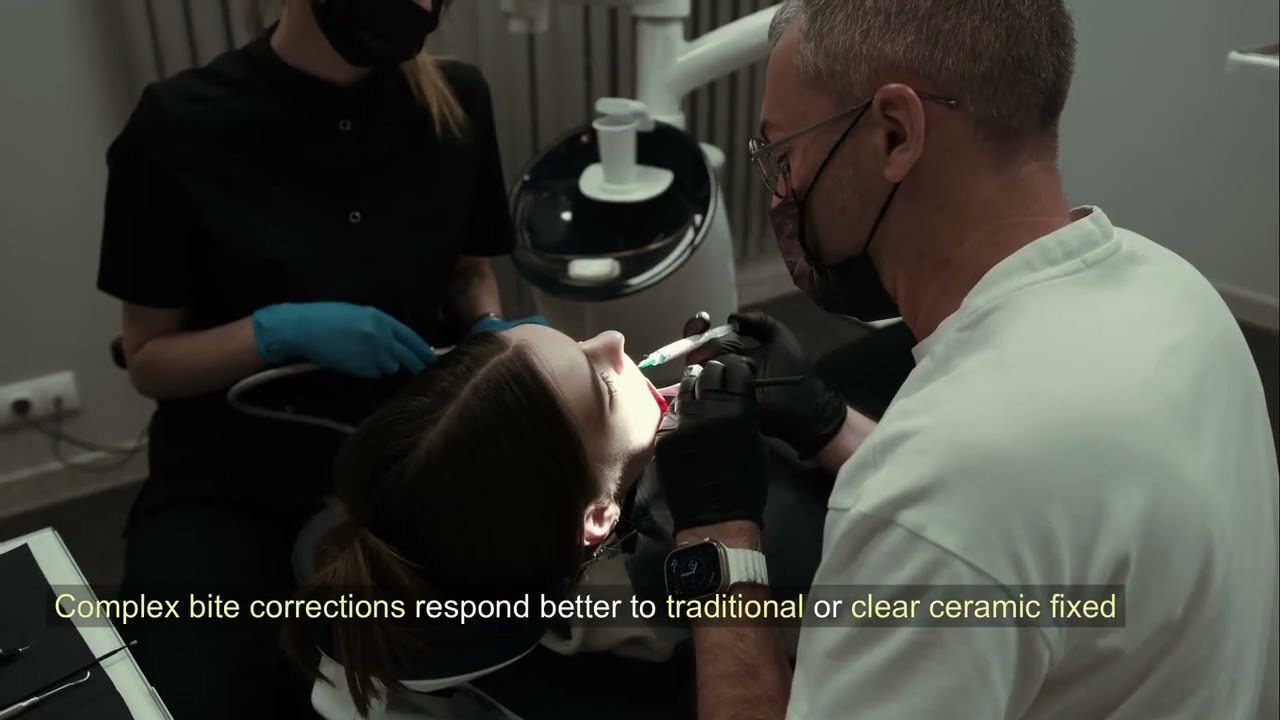
Invisalign, clear braces, and traditional braces each represent a distinct orthodontic path for straightening teeth and correcting bite issues. Choosing the right option depends on your specific dental situation, lifestyle, and budget – not just what looks appealing in an ad.
This guide focuses specifically on helping Vista, CA residents compare orthodontic options so they can walk into a consultation knowing exactly what questions to ask.
New aligner materials, faster bracket systems, and smarter digital planning tools mean patients today have more choices than ever. But more choices also means more confusion. Let’s break it down clearly.

What Each Option Actually Is
Invisalign: A series of custom-made, removable clear plastic aligners that gradually shift teeth into position. Patients typically swap to a new set every one to two weeks.
Clear (ceramic) braces: Fixed brackets bonded to the teeth – just like metal braces – but made from tooth-colored ceramic material that blends with your enamel.
Traditional metal braces: The classic system using stainless steel brackets and archwires. Still the most widely used orthodontic method in the world and highly effective for complex cases.
According to the American Dental Association, roughly four million people in the U.S. are currently undergoing orthodontic treatment. Most of them are adults or teens weighing the same three options you’re looking at right now.
Invisalign vs Clear Braces vs Traditional Braces: A Side-by-Side Look
| Feature | Invisalign | Clear Braces | Traditional Braces |
|---|---|---|---|
| Visibility | Nearly invisible | Low visibility | Visible |
| Removable? | Yes | No | No |
| Typical Cost Range (2026) | $4,000 – $8,000 | $3,500 – $6,500 | $2,500 – $5,500 |
| Treatment Duration | 6 – 18 months | 18 – 36 months | 18 – 36 months |
| Best For | Mild to moderate issues, adults | Moderate cases, appearance-conscious patients | Complex cases, all ages |
Cost ranges above reflect general industry pricing in 2026 and vary based on case complexity and provider. These are not the fees of any specific dental office.
Where Each Option Wins – and Where It Falls Short
Where Invisalign succeeds: It fits into adult professional life without disrupting your appearance. You remove aligners to eat and brush, which makes oral hygiene much simpler. For mild to moderate crowding, spacing, or minor bite issues, it performs well.
Where Invisalign fails: Patient compliance is everything. Aligners must be worn 20 to 22 hours per day to work. If you’re the type to forget them at the dinner table, results suffer. Severe bite corrections or significant tooth rotation often require traditional braces instead.
Where clear braces succeed: You get the discretion of tooth-colored hardware without needing the discipline to wear removable trays. They handle moderate cases well and are fixed, so they work around the clock.
Where clear braces fail: Ceramic brackets can stain if you drink coffee or red wine regularly. They’re also slightly more fragile than metal, which can mean more emergency visits if a bracket breaks. Cost is higher than traditional metal braces for similar results.
Where traditional braces succeed: For complex bite problems, significant crowding, or cases needing precise tooth movement, metal braces still deliver results that aligners can’t always match. They’re also the most cost-accessible option for families.
Where traditional braces fail: Visibility is the main drawback. Food restrictions, more involved cleaning routines, and the look of metal hardware are real lifestyle considerations – especially for working adults.
The verdict: For most teens or adults with mild to moderate alignment needs who can commit to wearing aligners consistently, Invisalign is a strong choice. For complex cases or patients who want fixed treatment without metal showing, clear braces offer a middle ground. Traditional braces remain the gold standard for significant corrections and are the most budget-friendly starting point.
Thinking about this for your situation? Let’s talk. The team at North County Dental Care can walk you through your options – no pressure, no obligation.
What Affects the Cost of Orthodontic Treatment in Vista?
Pricing varies more than most people expect. A few key factors drive the difference:
- Severity of crowding or bite misalignment
- Estimated treatment length
- Whether any pre-orthodontic dental work is needed first
- Your dental insurance plan and orthodontic benefit limits
- Retainer costs after treatment ends
Most dental insurance plans that include orthodontic coverage contribute between $1,000 and $2,500 toward treatment, though coverage caps vary widely. California residents should check their specific plan for lifetime orthodontic maximums, as plan designs can differ considerably from one insurer to the next.
Many orthodontic patients use some form of financing or payment plan to manage out-of-pocket costs. Many dental offices offer in-house plans or work with third-party financing options.
Your Orthodontic Decision Checklist
- Step 1 – Assess your case complexity: Ask your provider whether your bite issue is mild, moderate, or severe. This single factor narrows your options faster than anything else.
- Step 2 – Be honest about compliance: If you know you’ll lose or forget removable trays, fixed braces will likely deliver better results for you.
- Step 3 – Review your insurance benefits: Contact your insurance provider and ask specifically about orthodontic coverage, lifetime maximums, and which treatment types qualify.
- Step 4 – Compare total costs, not just starting prices: Include retainers, refinements (for aligners), and any follow-up visits in your comparison.
- Step 5 – Schedule a consultation: A proper evaluation with digital X-rays and an intraoral exam gives you a real picture of what treatment path makes sense.
Common Mistakes to Avoid
The most common mistake patients make is choosing based on appearance alone. Invisalign looks appealing on paper, but if your case needs significant bite correction, starting with aligners can delay results and cost more in the long run.
Another frequent issue: skipping retainers after treatment. Teeth will shift back without consistent retainer use. This applies to all three treatment types – braces or aligners, the retention phase is non-negotiable.
Patients also sometimes wait too long to start treatment. Adult tooth movement is possible at any age, but earlier intervention is generally more efficient and less costly.
See how the dental services at North County Dental Care can help you find the right starting point for your smile goals.
Serving Vista and the Surrounding Communities
North County Dental Care, located at 1000 East Vista Way in Vista, CA 92084, welcomes patients from across North San Diego County – including Oceanside, Carlsbad, San Marcos, Escondido, Encinitas, and the surrounding communities. If you’re searching for orthodontic guidance close to home, you don’t need to travel far.
Key Takeaways for Vista Residents in 2026
- Invisalign works best for mild to moderate cases where patient compliance is high and aesthetics matter most.
- Clear ceramic braces offer a fixed, lower-visibility option for patients who don’t want the responsibility of removable trays.
- Traditional metal braces remain the most effective for complex corrections and the most cost-accessible for families.
- Insurance and financing significantly affect out-of-pocket costs – always compare total treatment cost, not just the starting price.
- A professional evaluation is the only reliable way to know which treatment fits your specific bite and alignment needs.
Frequently Asked Questions
How long does Invisalign treatment take compared to traditional braces?
Invisalign typically takes 6 to 18 months for mild to moderate cases, while traditional braces usually run 18 to 36 months for more complex corrections. Your actual timeline depends on the severity of your alignment issues and how consistently you wear your aligners or attend adjustment appointments.
Is Invisalign covered by dental insurance in California?
Many dental insurance plans in California that include orthodontic benefits will cover Invisalign similarly to traditional braces, up to the plan’s lifetime maximum. Coverage typically ranges from $1,000 to $2,500. You’ll want to confirm with your specific insurer since plan terms vary considerably.
Do clear braces stain easily?
Ceramic clear braces can stain from foods and drinks like coffee, tea, red wine, and certain sauces, especially in the first 48 hours after placement. Good oral hygiene and limiting staining foods help minimize discoloration over the course of treatment.
Can adults get braces or Invisalign in 2026?
Absolutely – orthodontic treatment is effective for adults at any age, and demand among adult patients has grown steadily in recent years. The main difference from treating younger patients is that adult jaw bones are fully developed, which can slightly affect treatment pace in some cases.
What happens after braces or Invisalign treatment ends?
All orthodontic patients need to wear a retainer after treatment to prevent teeth from shifting back to their original positions. Retainers may be removable or permanently bonded behind the teeth, and your provider will recommend the right type based on your case.
How do I know which orthodontic option is right for me?
The only reliable way to determine the best orthodontic option is through a complete dental evaluation that includes X-rays and a bite assessment. A qualified dental provider can identify whether your case is mild, moderate, or complex – which is the deciding factor in which treatment will deliver the best outcome.
Ready to Find the Right Fit for Your Smile?
Choosing between Invisalign, clear braces, and traditional braces isn’t a decision you should make alone based on what looks good in photos. The right choice comes from understanding your actual bite, your lifestyle, and your budget – in that order.
North County Dental Care in Vista, CA is here to give you straight answers and honest guidance. No pressure, no upsell. Ready to take the next step? Contact us today and schedule a consultation. The sooner you start, the sooner you’ll have a smile that works for you – and 2027 is closer than you think.
This content is for informational purposes only and is not a substitute for professional dental advice. Please consult a licensed dental provider for guidance specific to your oral health needs.
Recent Comments