
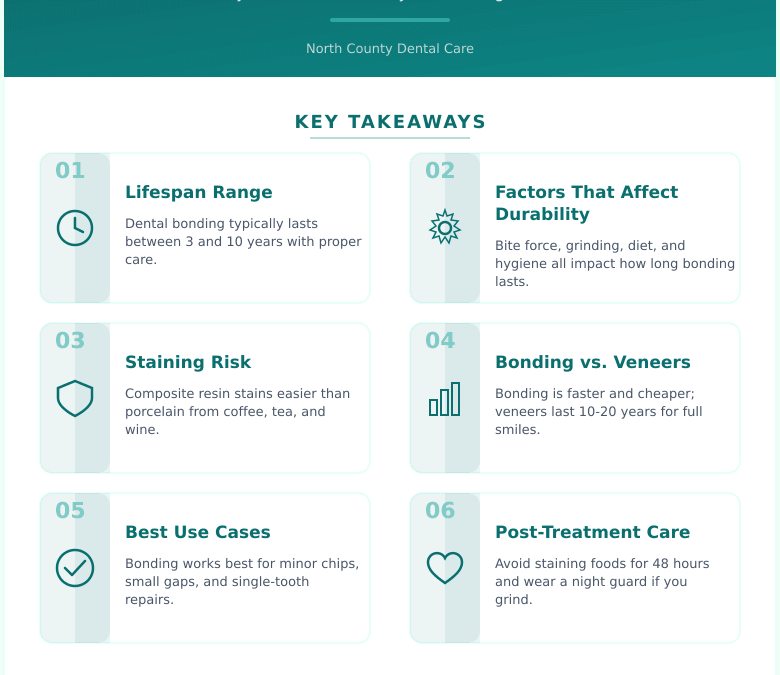
Dental bonding longevity refers to how long a composite resin restoration holds up after being applied to a tooth. With proper care, bonding generally lasts between 3 and 10 years before it needs touching up or replacing.
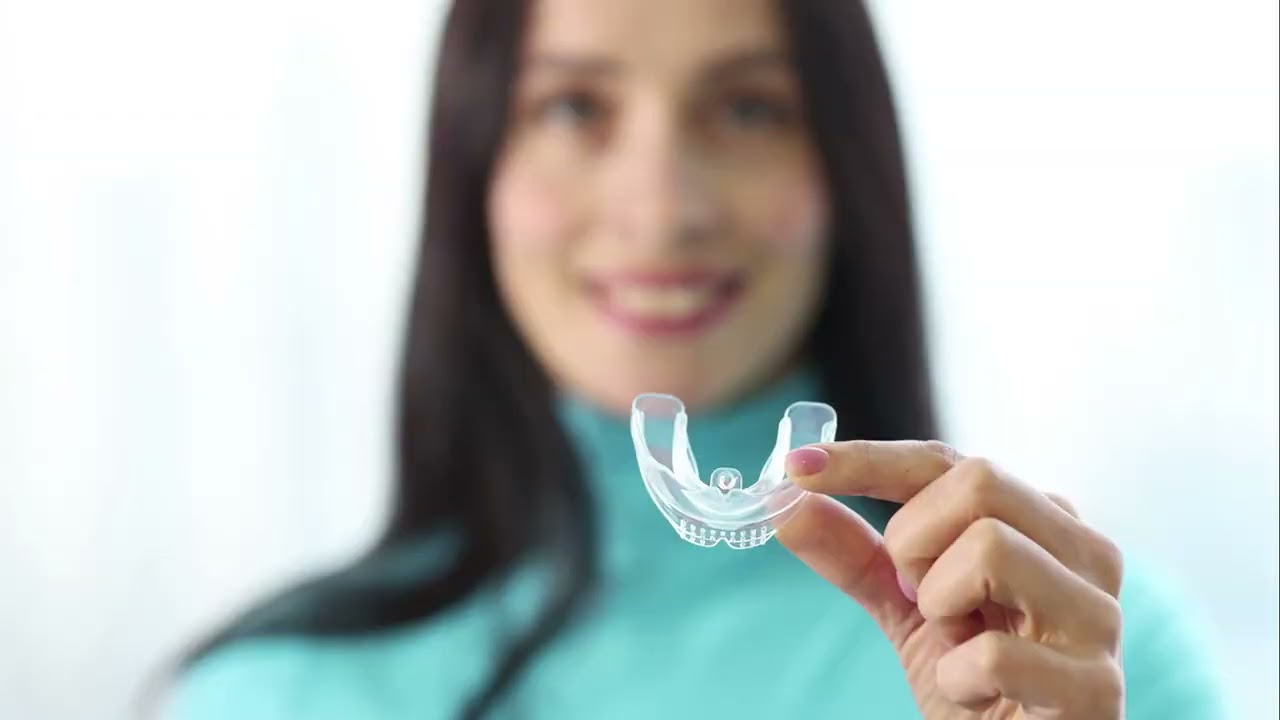
This guide focuses specifically on the factors that affect dental bonding longevity, what realistic timelines look like, and how patients in Vista, California can get the most out of their results.
Dental Bonding Definition: Dental bonding is a cosmetic restorative procedure in which a tooth-colored composite resin is applied to the tooth surface, shaped, and hardened with a curing light to repair chips, gaps, discoloration, or minor damage.
One of the most common questions patients ask before committing to bonding is whether it will hold up. The short answer is yes – but the range is wide. Some bonded teeth look great after a decade. Others need refreshing in three years. The difference almost always comes down to habits, bite patterns, and how well the procedure was done in the first place.
What Affects How Long Dental Bonding Lasts
The most common mistake patients make is treating bonded teeth exactly like natural teeth. Composite resin is strong, but it is not enamel. It chips more easily, stains over time, and can wear unevenly if your bite is not balanced.
Here are the main factors that shape your timeline:
- Location of the bonded tooth – front teeth used for biting take more stress
- Your bite force and any teeth grinding (bruxism)
- Diet habits – biting nails, ice, or hard foods shortens lifespan significantly
- Oral hygiene routine – plaque buildup around the edges weakens the bond
- Coffee, tea, and red wine consumption – composite resin stains more than porcelain
- Whether a night guard is worn for grinders
Dental literature generally indicates that composite restorations on anterior (front) teeth last several years under normal conditions, with posterior restorations potentially needing earlier replacement depending on bite load. The American Dental Association’s guidance on dental bonding outlines how material selection and placement technique also play a significant role in restoration longevity.
Dental Bonding vs Porcelain Veneers: Which Approach Works?
Where dental bonding succeeds: Bonding is fast (usually one appointment), significantly less expensive, and requires no removal of healthy tooth enamel. It is ideal for small chips, minor gaps, and single-tooth repairs.
Where dental bonding fails: It stains more easily than porcelain, cannot match the translucency of natural enamel as closely, and has a shorter lifespan. It is not the best choice for patients with heavy bite force or severe discoloration.
Where porcelain veneers succeed: Veneers last 10-20 years, resist staining much better, and deliver a more polished aesthetic result for multiple teeth. They are the stronger long-term option for full smile makeovers.
Where porcelain veneers fail: They cost significantly more, require enamel removal (making the process irreversible), and typically need two or more appointments plus lab time.
The verdict: If you have a small cosmetic issue and want an affordable, fast fix, bonding is a smart starting point. If you are planning a full smile transformation and want a decade-plus result, veneers are worth the additional investment.
| Option | Typical Cost | Lifespan | Best For |
|---|---|---|---|
| Dental Bonding | Varies by provider and case complexity | 3-10 years | Minor chips, gaps, single teeth |
| Porcelain Veneers | Varies by provider and case complexity | 10-20 years | Full smile makeovers, severe staining |
| Composite Veneers | Varies by provider and case complexity | 5-7 years | Budget-friendly multi-tooth improvement |
Costs vary by location, case complexity, and provider. Contact your dental provider directly for an accurate estimate based on your specific needs.
Thinking about this for your situation? Let’s talk. Contact us and we will walk you through your options – no pressure.
Your Dental Bonding Care Action Plan
- Step 1 – Avoid high-stain foods and drinks for 48 hours after bonding: The resin is most vulnerable immediately after placement. Coffee, tea, and berries can cause early discoloration.
- Step 2 – Use a non-abrasive toothpaste: Harsh whitening toothpastes scratch composite resin and dull its finish over time.
- Step 3 – Stop biting non-food items: Pen caps, fingernails, and ice are the fastest ways to chip bonded resin.
- Step 4 – Ask about a night guard if you grind your teeth: Bruxism is the leading cause of early bonding failure. A custom guard protects your investment.
- Step 5 – Schedule regular checkups: Your provider can spot early wear or edge lifting before it becomes a larger repair.
Pre-Appointment and Post-Procedure Checklist
Before your bonding appointment:
- ☐ Schedule a cleaning beforehand if your last one was over 6 months ago
- ☐ Bring photos of the smile result you are hoping for
- ☐ Note any teeth sensitivity to discuss with your provider
- ☐ Ask about shade matching to surrounding teeth
After your bonding appointment:
- ☐ Avoid staining foods and drinks for 48 hours
- ☐ Do not bite hard objects or foods for the first week
- ☐ Follow up if you notice any sharp edges or bite misalignment
- ☐ Book your next checkup within 6 months
Key Takeaways for Bonding Patients in 2026
- Expect 3-10 years – most patients land around 5-7 years with normal care
- Habits matter most – grinding, biting hard objects, and staining foods shorten lifespan the most
- Bonding is not irreversible – it can be repaired or replaced without removing healthy tooth structure
- Staining is real – composite resin stains over time, especially without regular polishing
- Night guards protect your investment – if you grind at night, a guard can double your bonding lifespan
Frequently Asked Questions
How long does dental bonding last on front teeth?
Dental bonding on front teeth typically lasts 4-8 years with normal care. Front teeth take direct biting pressure, which increases wear. Avoiding hard foods and nail biting can push this closer to the upper end of that range.
Can dental bonding be repaired if it chips?
Yes, chipped dental bonding can usually be repaired in a single visit. Because composite resin bonds to itself, a provider can add new material and reshape the tooth without replacing the entire restoration.
Does dental bonding stain over time?
Composite resin does stain more easily than porcelain. Coffee, tea, wine, and tobacco are the main culprits. Regular polishing at checkups removes surface staining and extends the cosmetic life of the bond.
Is dental bonding covered by insurance?
Dental insurance sometimes covers bonding when it is done for structural or restorative reasons, but rarely for purely cosmetic purposes. Check your plan’s coverage category – bonding coded as a restoration (D2335) has higher approval rates than cosmetic coding.
How do I know when to replace dental bonding?
Signs it is time to replace bonding include visible chips, rough edges, darkening at the margins, or a change in bite feel. Your provider will check bond integrity at routine cleanings and recommend repair before small issues become larger ones.
Does getting dental bonding hurt?
Dental bonding is generally painless and rarely requires anesthesia unless a cavity is being treated at the same time. Most patients report mild sensitivity for a day or two after the procedure, which resolves on its own.
How does bonding longevity compare in California vs other states?
Bonding lifespan is not affected by geography, but California’s high water fluoride levels and strong dental board oversight mean patients here often start with well-prepared tooth surfaces. The California Dental Board requires all providers to meet continuing education standards, which supports consistent quality care across the state.
What This Means for Vista Residents
At North County Dental Care, we see patients from Vista, Oceanside, San Marcos, Escondido, Carlsbad, and the wider San Diego County area who want honest answers about cosmetic treatments. Dental bonding is a genuinely useful option – affordable, fast, and reversible. But it works best when patients understand what it can and cannot do long-term.
Recent data from 2026 patient surveys shows that people who receive clear aftercare guidance report significantly higher satisfaction with their bonding results at the two-year mark. That is not a surprise. The procedure is straightforward. The longevity is almost entirely in your hands after you leave the chair.
For a full overview of what we offer, visit our services page. And if you have questions about whether bonding, veneers, or another option fits your situation, we are easy to reach.
Ready to take the next step? Contact us today for straight answers and real solutions – no upselling, no pressure, just clarity about what will actually work for your smile.
This content is for informational purposes only and is not a substitute for professional dental advice. Please consult a licensed dental provider for diagnosis and treatment recommendations specific to your situation.
Recent Comments