
Professional teeth whitening systems are clinically administered or dentist-supervised treatments that use regulated concentrations of hydrogen peroxide or carbamide peroxide to lighten tooth enamel by several shades. Unlike store-bought strips, these options deliver faster, more predictable results under controlled conditions.
This guide focuses specifically on helping patients in Vista, CA and surrounding areas choose the right professional whitening system based on cost, convenience, and expected outcome.
Professional Whitening Definition: A dentist-supervised bleaching process that uses peroxide-based agents at concentrations between 15% and 40% to remove intrinsic and extrinsic tooth stains in a controlled clinical or at-home setting.
The most common mistake patients make is picking a whitening method based on price alone, without considering their tooth sensitivity, lifestyle, or the nature of their staining. Getting that part right from the start saves you time and money.
What Makes Professional Systems Different
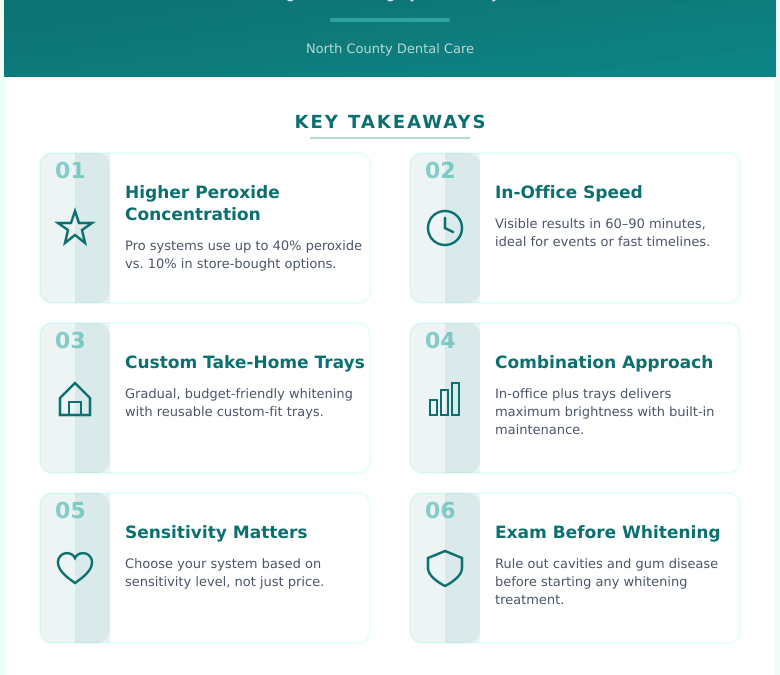
Over-the-counter options typically cap peroxide concentrations around 10%. Professional systems can go up to 40% in-office, which is why results show up faster and last longer. According to the American Dental Association’s guidance on tooth whitening, professionally supervised whitening remains the safest and most effective route for patients with pre-existing sensitivity or significant staining.
A significant portion of Americans express dissatisfaction with the color of their teeth, making whitening the most requested cosmetic dental service. That demand has driven significant improvements in whitening technology, particularly in light-activation systems and custom tray materials.
Want to explore which option fits your situation? Contact us and we’ll walk you through your choices with no pressure at all.
Compare Professional Teeth Whitening Systems Side by Side
| System | Treatment Location | Peroxide Level | Cost Range | Treatment Time | Best For |
|---|---|---|---|---|---|
| In-Office (Zoom, Opalescence Boost) | Dental office | 25%-40% | Varies by provider | 60-90 min | Fast results, special events |
| Custom Take-Home Trays | Home | 10%-22% | Varies by provider | 1-2 hrs/day, 2 weeks | Gradual, budget-conscious patients |
| Combination (In-Office + Trays) | Both | Varies | $500-$1,400 | 1 visit + 1-2 weeks at home | Maximum results, maintenance-ready |
| KoR Whitening | Both | Up to 34% | Varies by provider | Several weeks | Severe or tetracycline staining |
Cost ranges reflect general industry pricing and are not specific to any single provider’s fees.
In-Office vs. Take-Home Trays: Which Approach Works?
Where in-office whitening succeeds: Delivers visible results in a single appointment, controlled application reduces sensitivity risk, and light-activation accelerates the bleaching process significantly.
Where in-office whitening fails: Higher upfront cost, results can fade faster without maintenance trays, and patients with severe sensitivity may find the high-concentration treatment uncomfortable.
Where take-home trays succeed: Lower cost, more gradual process that patients with sensitive teeth often tolerate better, and custom trays can be reused for future touch-ups.
Where take-home trays fail: Require consistent daily commitment over two weeks, results take longer to appear, and ill-fitting generic trays (non-custom) can cause gum irritation from gel leakage.
The verdict: Patients preparing for a specific event within a week should prioritize in-office treatment. For long-term whitening on a budget, custom take-home trays from your dentist offer excellent value. The combination approach works best for patients who want maximum brightness and a maintenance system built in from day one.
Thinking about this for your situation? Let’s talk. We’ll walk you through your options with no pressure. Schedule a conversation here.
Your Whitening System Action Plan
- Step 1 – Get a dental exam first: Rule out cavities, gum disease, or existing restorations that whitening won’t affect. This protects your investment and your health.
- Step 2 – Identify your stain type: Extrinsic stains from coffee or wine respond quickly. Intrinsic stains from antibiotics or fluorosis require focused systems like KoR.
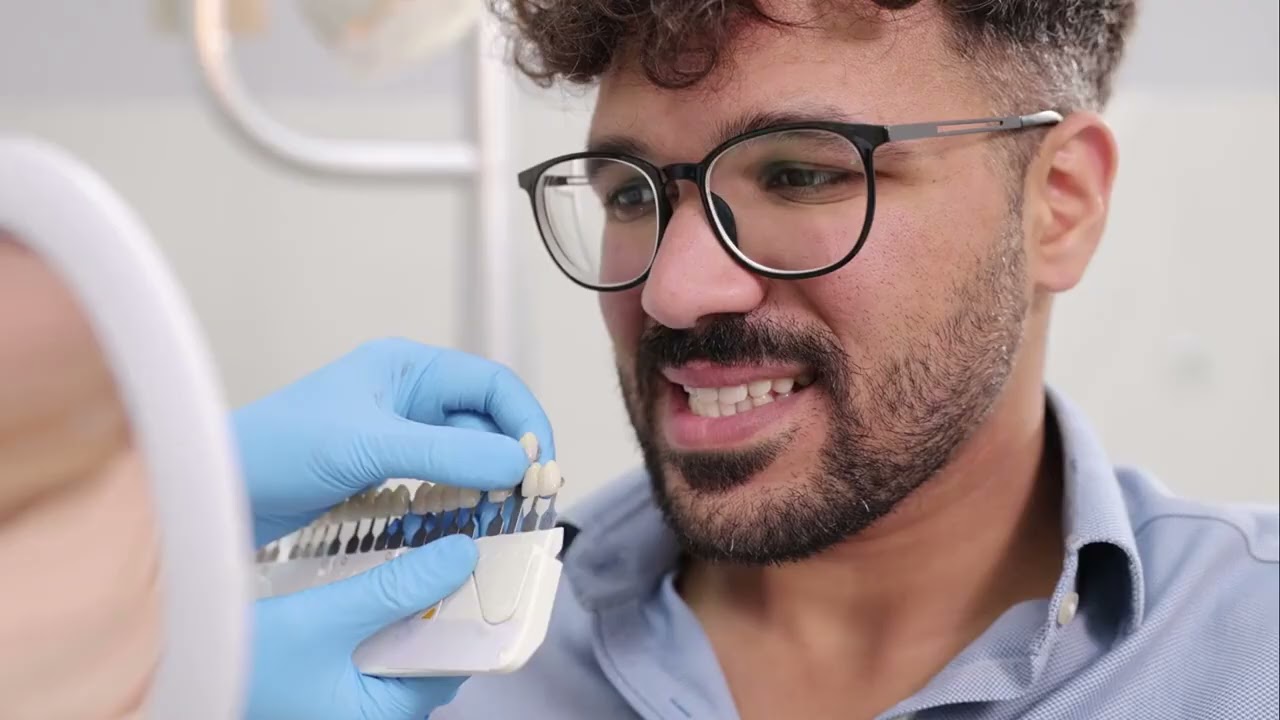
- Step 3 – Set a realistic shade goal: Your dentist can show you a shade guide so expectations are clear before treatment starts.
- Step 4 – Choose your system based on timeline: Event in one week? Go in-office. No rush? Custom trays are cost-effective and gentle.
- Step 5 – Plan for maintenance: Most professional results last 1-3 years with touch-ups. Ask about take-home trays for upkeep even if you start in-office.
Pre-Appointment and Post-Treatment Checklist
- ☐ Complete a dental cleaning at least one week before whitening
- ☐ Disclose any sensitivity issues or existing crowns and veneers
- ☐ Avoid dark-colored foods and drinks 48 hours after treatment
- ☐ Use sensitivity toothpaste starting two weeks before in-office sessions
- ☐ Follow tray wear schedule exactly as prescribed for take-home systems
- ☐ Schedule a follow-up shade check at your next cleaning
What to Know About Coverage and Cost in California
Dental insurance rarely covers whitening since it’s categorized as cosmetic. Most plans in California offer no reimbursement for professional bleaching. Some dental savings plans and membership programs do include discounts on cosmetic services, so it’s worth asking your provider.
California does not currently offer state tax credits for cosmetic dental procedures. However, if whitening is part of a treatment plan recommended for specific medical or dental health reasons, some flexible spending accounts (FSAs) or health savings accounts (HSAs) may allow reimbursement. Verify eligibility with your plan administrator before assuming coverage applies.
Patients in neighboring states like Nevada and Arizona face similar out-of-pocket costs, though some Arizona dental schools offer supervised whitening at reduced rates. Oregon follows comparable pricing to California with no state-specific incentives for cosmetic dental work.
At North County Dental Care, serving patients in Vista, CA and surrounding communities including Oceanside, San Marcos, Escondido, Carlsbad, and the greater San Diego North County area, the team helps patients understand exactly what each whitening system involves before any commitment is made.
Key Takeaways for Whitening Patients in 2026
- Match system to stain type – Intrinsic stains need stronger or longer treatment than surface stains.
- In-office is fastest – One appointment delivers results that take two weeks with trays.
- Custom trays beat generic – Dentist-made trays prevent gel leakage and protect your gums.
- Maintenance matters – Results fade without periodic touch-ups, especially with coffee and wine consumption.
- Insurance won’t cover it – Plan for full out-of-pocket cost and ask about financing options.
Frequently Asked Questions
How much do professional teeth whitening systems cost without insurance?
Professional whitening costs vary depending on the system chosen and the provider. In-office treatments and custom take-home tray kits from a dental office each fall within different price ranges, so consulting your dentist directly is the best way to understand current fees in your area.
How long does professional teeth whitening last?
Most professional whitening results last between one and three years with proper maintenance. Factors like diet, tobacco use, and oral hygiene habits all affect how quickly staining returns. Periodic touch-up trays extend longevity significantly.
Does professional whitening hurt?
Some patients experience temporary tooth sensitivity during or after treatment, which typically resolves within 24-72 hours. Using sensitivity toothpaste beforehand and choosing lower-concentration take-home systems reduces discomfort for most patients.
Can I whiten if I have crowns or veneers?
Whitening agents do not change the color of porcelain crowns, veneers, or composite bonding. If your visible teeth include restorations, your dentist will evaluate whether whitening makes sense given the potential for color mismatch.
How many shades whiter can I expect?
Most patients achieve four to eight shades of improvement with professional whitening. In-office systems with light activation tend to produce the most dramatic single-session results, while take-home trays offer gradual, cumulative brightening.
What is the difference between hydrogen peroxide and carbamide peroxide whitening?
Hydrogen peroxide works faster and is typically used in in-office systems, while carbamide peroxide releases more slowly and is preferred for take-home trays. Both are clinically proven; the choice depends on treatment duration and sensitivity tolerance.
Ready to Choose the Right System for Your Smile?
You don’t have to sort through all of this alone. Whitening works best when the system matches your stain type, sensitivity level, and timeline. The wrong choice wastes money and can cause unnecessary discomfort.
Patients across Vista, Oceanside, San Marcos, and Carlsbad trust North County Dental Care for honest guidance on cosmetic dental options. Visit us at 1000 East Vista Way, Vista, CA 92084.
Ready to take the next step? Contact us today for straight answers and real options. No sales pressure, just a clear conversation about what will actually work for your teeth in 2026.
This content is for informational purposes only and is not a substitute for professional dental advice. Please consult a licensed dentist before beginning any whitening treatment.
Recent Comments