
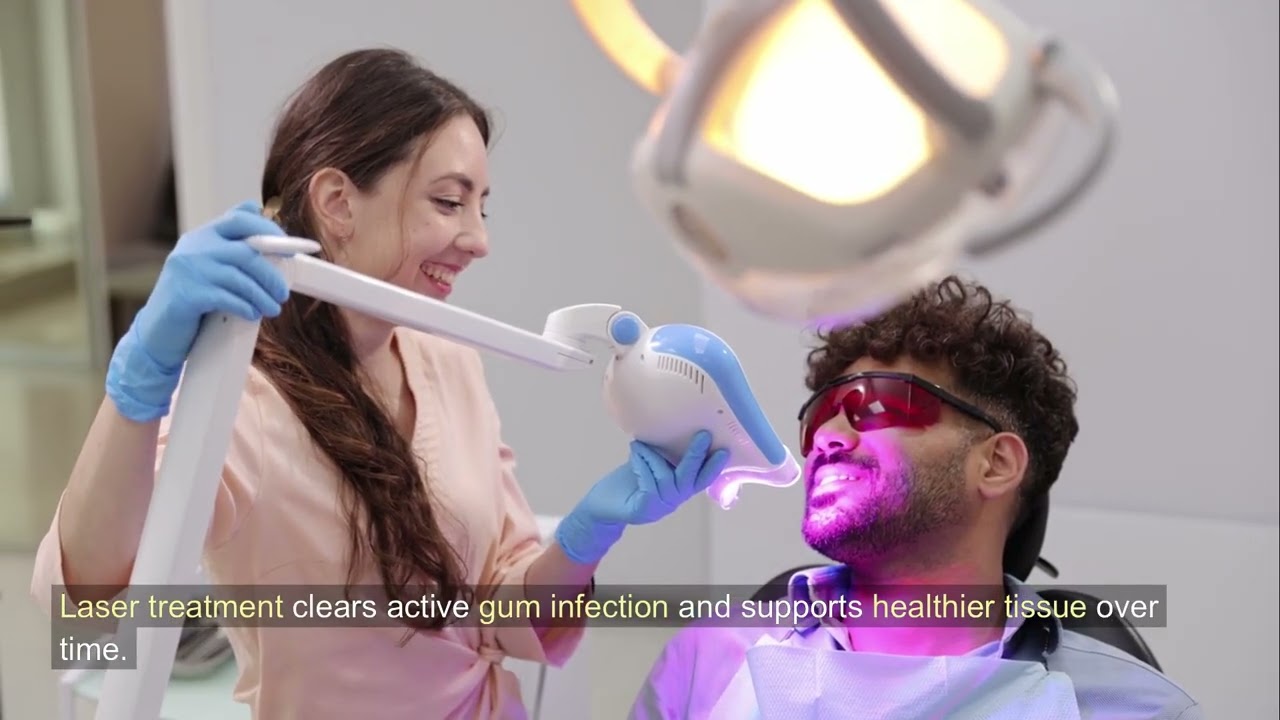
Gum recession is the gradual exposure of tooth roots caused by gum tissue pulling back from the tooth surface, often triggered by gum disease, aggressive brushing, or genetic factors. Left untreated, it can lead to sensitivity, bone loss, and eventual tooth loss.
This guide focuses specifically on helping patients understand three main treatment paths for gum recession tied to gum disease: laser therapy, pinhole surgery, and traditional gum grafting.
Gum Recession Definition: Gum recession is the loss of gum tissue along the gumline, exposing tooth roots and creating pockets where bacteria accumulate, increasing the risk of decay and bone damage.
According to the National Institute of Dental and Craniofacial Research, nearly half of adults over 30 show signs of periodontal disease, which is the leading cause of gum recession. If your gums look like they are shrinking or your teeth feel increasingly sensitive, you are not imagining it.
At North County Dental Care in Vista, CA, we see patients from across San Diego County who waited too long to address gum changes. The good news is that modern options range from minimally invasive to surgical, and matching the right approach to your condition makes a real difference.

Why Gum Recession and Gum Disease Go Hand in Hand
Gum disease (periodontitis) destroys the tissue and bone supporting your teeth. As the infection progresses, gums detach from the tooth surface and begin to recede. The root becomes exposed and vulnerable to bacteria, temperature sensitivity, and decay.
Periodontitis: A serious bacterial infection of the gums that damages the soft tissue and can destroy the bone supporting your teeth if not treated.
Gum grafting: A surgical procedure in which tissue is repositioned or transplanted to cover exposed roots and restore a healthy gumline.
The pattern we see most often is patients who noticed sensitivity or bleeding months before seeking care. By the time they arrive, recession has progressed further than it needed to. Early intervention consistently produces better outcomes with less invasive procedures.
Three Treatment Options: What Each One Actually Does
Here is a side-by-side look at the three primary approaches used for gum recession related to periodontal disease.
| Treatment | Invasiveness | Cost | Recovery | Best For |
|---|---|---|---|---|
| Laser Therapy (LANAP) | Minimal | Varies by case and provider | 1-3 days | Mild to moderate gum disease with early recession |
| Pinhole Surgical Technique | Low to moderate | Varies by case and provider | 2-5 days | Moderate recession without significant bone loss |
| Traditional Gum Graft | Moderate to high | Varies by case and provider | 1-2 weeks | Severe or localized recession requiring new tissue |
Costs vary based on case complexity, provider, location, and insurance coverage. Contact your dental provider for an individualized estimate.
Laser Treatment vs. Pinhole Surgery: Which Approach Works?
Where laser therapy (LANAP) succeeds: It targets infected tissue with precision, reduces bacteria, and stimulates regeneration without cutting. Recovery is fast, bleeding is minimal, and it works well when recession is in early stages.
Where laser therapy fails: It cannot physically move or replace tissue. If significant root exposure already exists, laser alone will not restore lost gumline height.
Where pinhole surgery succeeds: The Chao Pinhole Surgical Technique is a scalpel-free, minimally invasive procedure that repositions existing gum tissue through a small entry point. Multiple teeth can often be treated in one appointment with minimal downtime.
Where pinhole surgery fails: It requires sufficient existing gum tissue to work with. Patients with very thin or severely depleted gum tissue may not have enough to reposition. It also does not replace lost tissue volume.
The verdict: For active gum disease with early recession, laser treatment addresses the infection while supporting tissue health. For established recession without severe bone loss, pinhole surgery offers visible gumline restoration with less recovery than grafting. These two approaches are not always competing – some treatment plans use both.
Thinking about which option fits your situation? Let’s talk. We will walk you through your options with no pressure.
When Traditional Gum Surgery Is Still the Right Call
Traditional connective tissue grafts (CTG) or free gingival grafts remain the most predictable method for severe, localized recession. Tissue is typically harvested from the palate and sutured over the exposed root.
- Most clinically documented long-term outcomes of any gum recession treatment
- Adds actual tissue volume where gum tissue has been lost entirely
- Can correct recession on multiple teeth in one procedure
- Required when recession has progressed past the point where repositioning alone is viable
Recovery takes longer and discomfort is higher than with the other options. But for advanced cases, it consistently delivers results that laser or pinhole alone cannot match. Recent data shows that connective tissue grafts achieve root coverage rates above 80% in carefully selected patients.
Your Gum Recession Treatment Action Plan
- Step 1 – Get a Periodontal Evaluation: A full periodontal charting measures pocket depths, bone levels, and tissue quality. This tells you how far recession has progressed and which treatment path is realistic.
- Step 2 – Address Active Infection First: If gum disease is present and active, it must be controlled before any recession repair. That typically means scaling and root planing, and possibly laser-assisted decontamination.
- Step 3 – Confirm Tissue Quantity and Quality: Your provider will assess whether you have enough tissue for pinhole repositioning or whether grafting is necessary.
- Step 4 – Choose and Schedule Your Procedure: Most procedures are completed in one to two appointments. Plan recovery time accordingly based on the technique selected.
- Step 5 – Commit to Maintenance: Periodontal maintenance visits every three to four months help prevent recurrence and protect your investment.
Pre-Appointment Checklist
- ☐ Note which teeth feel sensitive or look longer than before
- ☐ List any medications, especially blood thinners or anti-inflammatories
- ☐ Bring recent dental X-rays if available
- ☐ Ask about sedation options if dental anxiety is a concern
- ☐ Confirm your insurance plan’s periodontal coverage ahead of your visit
Key Takeaways for Vista Patients in 2026
- Gum recession is treatable – early detection opens the door to minimally invasive options
- Laser therapy targets infection – it is not a standalone fix for visible recession but works well as part of a broader plan
- Pinhole surgery is scalpel-free – a real option for patients who qualify but requires adequate existing tissue
- Traditional grafting remains the gold standard – especially for advanced or localized cases
- Maintenance prevents recurrence – treating recession once is not enough without ongoing care
Frequently Asked Questions
How do I know if I have gum recession from gum disease?
The most common signs are teeth that look longer than before, sensitivity near the gumline, and visible root surfaces. Bleeding when brushing and persistent bad breath often signal that active gum disease is contributing to the problem. A periodontal exam is the only way to confirm severity.
Is laser gum treatment covered by dental insurance?
Coverage depends on your plan, but many insurers cover laser-assisted periodontal therapy similarly to traditional scaling and root planing. Always verify with your carrier before scheduling. Patients in Vista, CA and throughout San Diego County should check their specific California plan benefits for 2026 periodontal codes.
Does pinhole surgery hurt?
Most patients report mild soreness for two to three days, which is significantly less than traditional grafting. Local anesthesia is used during the procedure itself, and over-the-counter pain relief is typically enough for recovery.
How long do gum grafts last?
With proper maintenance, gum grafts can last a lifetime. The most common reason for recurrence is the same risk factor that caused the original recession – untreated gum disease, aggressive brushing technique, or grinding. Consistent periodontal care protects your results.
Can gum recession be reversed without surgery?
Once gum tissue has receded, it does not grow back on its own. Very early cases may stabilize with improved oral hygiene and professional cleanings, but any meaningful restoration of the gumline requires a procedural approach.
How do I find a qualified provider for gum recession in Vista, CA?
Look for a dentist or periodontist with documented training in the specific technique you are considering. Ask whether they perform a full periodontal evaluation before recommending a treatment, and check that they hold an active California Dental Board license. You can explore our FAQ page for more guidance on what to ask at your first visit.
Your Next Step Toward a Healthier Gumline
Gum recession does not pause while you think it over. The tissue loss you see today tends to progress without treatment, and the gap between a simple procedure and a surgical one can close faster than most patients expect.
North County Dental Care serves patients in Vista, Oceanside, Carlsbad, San Marcos, Escondido, and the broader North San Diego County area. Our team is ready to walk through your options clearly, based on your actual condition, not a one-size-fits-all recommendation.
Ready to take the next step? Contact us today for straight answers and a real look at what your gums need. The sooner you know, the more options you have.
This content is for educational purposes only and is not a substitute for professional dental advice, diagnosis, or treatment. Always consult a licensed dental professional regarding your specific condition.
Recent Comments