
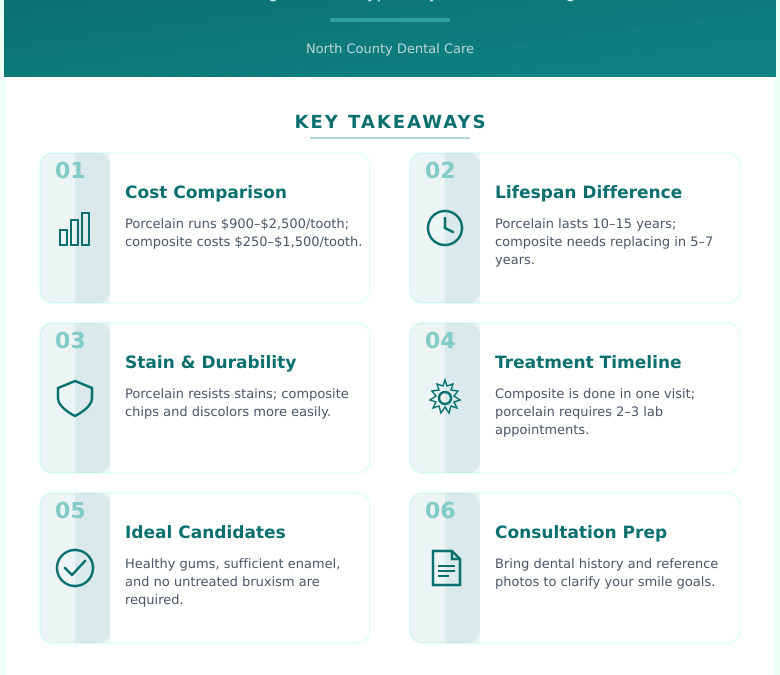
A cosmetic dentist for veneers is a dental professional who places thin, custom-crafted shells over the front surface of teeth to correct color, shape, size, or alignment. The right veneer choice depends heavily on your budget, timeline, and long-term goals.
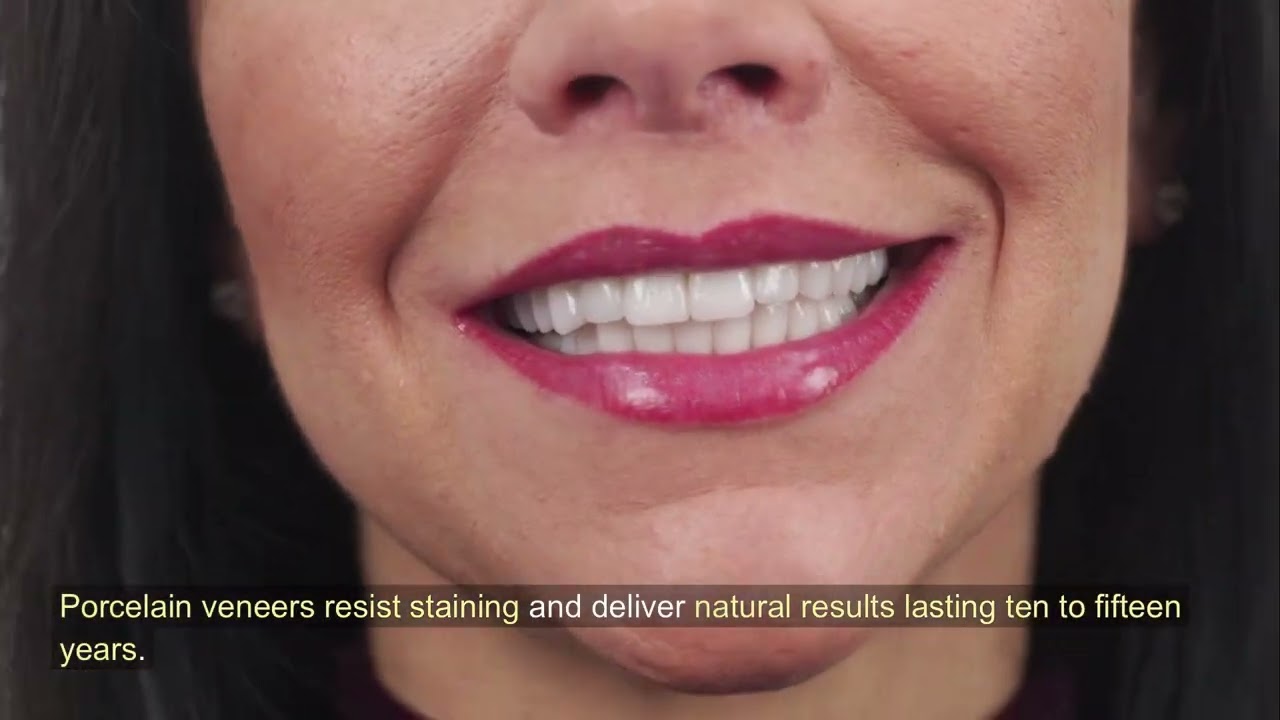
This guide focuses specifically on helping Vista, CA residents understand veneer types, costs, and what to expect before booking a consultation.
Veneers Definition: Dental veneers are wafer-thin coverings bonded to the front surface of teeth to improve appearance, available in porcelain or composite resin, each with distinct trade-offs in durability, cost, and aesthetics.
Lots of people come in with questions about veneers after seeing before-and-after photos online. The most common mistake we see is choosing a material based purely on upfront cost without considering how long it needs to last. That single decision can mean the difference between a result you love for 15 years versus one you’re replacing in five.
Porcelain Veneers vs Composite Veneers: Which Approach Works?
Where porcelain veneers succeed: Porcelain mimics natural tooth enamel brilliantly. It resists staining from coffee and red wine, lasts 10-15 years on average, and looks incredibly lifelike under different lighting conditions.
Where porcelain veneers fail: They cost significantly more upfront and require some enamel removal, making the process irreversible. Fabrication also requires a dental lab, so you typically wait one to two weeks between appointments.
Where composite veneers succeed: Composite resin is applied and sculpted chairside in a single visit. No lab wait, lower upfront cost, and if one chips, it can often be repaired without replacing the entire veneer.
Where composite veneers fail: Composite stains more easily, chips more readily, and typically lasts five to seven years before needing replacement or touch-up. Over a 15-year window, the cumulative cost can approach or exceed porcelain.
The verdict: Patients who want the most natural-looking, longest-lasting result and can invest upfront benefit most from porcelain. Those wanting a fast, lower-cost improvement with future flexibility often start with composite. Your cosmetic dentist for veneers should walk you through both before you decide.
| Feature | Porcelain Veneers | Composite Veneers |
|---|---|---|
| Cost per tooth (2026) | $900 – $2,500 | $250 – $1,500 |
| Lifespan | 10-15 years | 5-7 years |
| Stain resistance | High | Moderate |
| Visits required | 2-3 visits | 1 visit |
| Reversibility | Irreversible | More reversible |
| Best for | Dramatic, lasting change | Budget-conscious or trial |
Thinking about this for your specific smile situation? Contact us and we’ll walk you through your options with no pressure and no jargon.
Signs You May Be a Good Candidate for Cosmetic Veneers
Not everyone qualifies right away. A good cosmetic dentist for veneers in 2026 will screen for these factors first.
- Teeth that are chipped, cracked, or worn down
- Stubborn discoloration that doesn’t respond to whitening
- Minor gaps or spacing irregularities
- Teeth that appear too small or uneven in shape
- Healthy gum tissue with no active periodontal disease
- Sufficient enamel for bonding (critical for porcelain)
If you grind your teeth at night (bruxism), that needs addressing first. Grinding puts enormous stress on veneers and can shorten their lifespan significantly. Recent data suggests roughly 10-15% of adults have some degree of bruxism, many without realizing it.
Your Veneer Consultation Action Plan
- Step 1 – Gather your dental history: Bring records of any prior crowns, fillings, or orthodontic work. This helps your dentist assess your enamel and bite alignment before recommending a veneer type.
- Step 2 – Clarify your smile goals: Bring reference photos. Be specific about what bothers you. General requests like ‘whiter teeth’ lead to vague treatment plans.
- Step 3 – Ask about a trial smile (mock-up): Many offices use digital imaging or composite mock-ups so you can preview results before committing to irreversible enamel reduction.
- Step 4 – Review the full cost breakdown: Get itemized pricing including X-rays, temporaries, lab fees, and any needed pre-treatment (like gum contouring).
- Step 5 – Confirm aftercare expectations: Ask how to maintain veneers, what foods to avoid initially, and what the protocol is if one chips.
Pre-Appointment and Post-Procedure Checklist
Before your veneer consultation:
- ☐ List of current medications and any known allergies
- ☐ Photos of smiles you admire (reference images)
- ☐ Questions about insurance and financing options
- ☐ Recent dental X-rays if available
After your veneers are placed:
- ☐ Avoid staining foods and drinks for 48 hours
- ☐ Use non-abrasive toothpaste only
- ☐ Wear a night guard if you have any grinding history
- ☐ Schedule a follow-up check at six weeks
What Veneers Typically Cost in California (2026)
California dental costs run higher than national averages due to cost of living and lab fees. As a general industry reference for 2026, porcelain veneers in Southern California typically range from $1,200 to $2,500 per tooth. Composite veneers range from $400 to $1,500 per tooth depending on complexity.
According to the American Dental Association, most dental insurance plans classify veneers as cosmetic and do not cover them. That said, if a veneer is placed to restore a fractured tooth, partial coverage is sometimes possible. Always verify with your carrier before treatment.
Many practices in Vista and the greater San Diego area offer financing through third-party providers like CareCredit or Lending Club Patient Solutions, allowing patients to spread payments over 12-24 months.
At North County Dental Care, serving patients in Vista, Oceanside, San Marcos, Escondido, Carlsbad, and the surrounding North San Diego County communities, the team walks every patient through the full cost picture before any commitment is made.
Key Takeaways for Veneer Patients in 2026
- Material choice matters long-term – porcelain lasts longer but costs more upfront; composite offers flexibility at lower initial investment.
- Enamel health is a prerequisite – active decay or gum disease must be treated before veneer placement begins.
- Bruxism needs management first – grinding shortens veneer lifespan dramatically regardless of material.
- Ask for a mock-up – previewing the result before enamel reduction prevents regret.
- California insurance rarely covers cosmetic veneers – budget accordingly and explore financing early.
Frequently Asked Questions
How long do porcelain veneers last?
Porcelain veneers typically last 10-15 years with proper care. Longevity depends on oral hygiene, bite habits, and whether you wear a night guard if you grind. Composite veneers average 5-7 years before replacement or significant repair.
Does getting veneers hurt?
The procedure is done under local anesthesia, so discomfort during placement is minimal. Some patients experience mild sensitivity for a few days after enamel preparation, which typically resolves within one to two weeks.
How do I find a qualified cosmetic dentist for veneers in Vista, CA?
Look for a dentist with documented cosmetic training, before-and-after case photos, and clear consultation processes. You can verify California dental licenses through the Dental Board of California at dbc.ca.gov. Membership in the American Academy of Cosmetic Dentistry is an additional signal of focused cosmetic training.
Are veneers covered by dental insurance in California?
Most California dental plans classify veneers as cosmetic and exclude them from coverage. In cases where a veneer replaces a fractured or structurally compromised tooth, partial benefits may apply. Always call your insurer before your consultation.
Can veneers fix crooked teeth?
Veneers can correct the appearance of mildly misaligned or uneven teeth without orthodontics. For significant crowding or bite issues, orthodontic treatment first is the safer long-term approach. Your dentist can assess which path makes clinical sense for your situation.
How do I maintain veneers after placement?
Daily brushing with a non-abrasive toothpaste, flossing, and regular professional cleanings are the foundation of veneer maintenance. Avoid biting hard objects like ice or pen caps, and wear a night guard if grinding is a concern. Annual dental visits allow early detection of any veneer wear.
Ready to Explore Your Veneer Options?
Getting veneers is a meaningful decision, and the right place to start is a straightforward conversation with a provider who gives you honest answers. No upselling, no pressure, just a clear picture of what’s possible for your smile and your budget.
The team at North County Dental Care welcomes patients from Vista, Oceanside, Carlsbad, San Marcos, Escondido, and throughout North County San Diego. If you’re ready to explore what veneers could do for your smile, Contact us today and schedule a consultation. Come in, ask your questions, and leave with a real plan.
Recent Comments